
Truck owners often start with a number—2 inches, 3 inches, 6 inches—before they have decided what problem they are trying to solve. A better suspension decision starts with the truck’s actual use: daily driving, towing, tire clearance, desert trails, ground clearance, appearance, or some combination of them.
What Is the Difference Between a Lift Kit and a Leveling Kit?
A pickup commonly sits higher in the rear than the front when unloaded. That factory rake leaves room for payload and tongue weight to compress the rear suspension. A leveling kit typically raises the front enough to reduce some or most of that rake. A full suspension lift raises the truck more substantially and may alter components at both ends to provide additional ride height and clearance.
Leveling kit
Primarily changes front stance
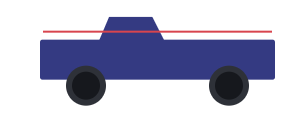
Best suited to owners whose main goal is reducing front rake, modest tire clearance, or a more level appearance.
Actual height and component requirements vary by vehicle..
Suspension lift
Raises the truck for more clearance
Better suited to builds that need more overall height, off-road clearance, suspension changes, or substantially larger tire packages.
A larger lift affects more systems and needs a complete vehicle-specific plan.
Leveling kit
Primarily changes front stance
Best suited to owners whose main goal is reducing front rake, modest tire clearance, or a more level appearance.
Actual height and component requirements vary by vehicle..
Suspension lift
Raises the truck for more clearance
Better suited to builds that need more overall height, off-road clearance, suspension changes, or substantially larger tire packages.
A larger lift affects more systems and needs a complete vehicle-specific plan.
Lift Kit vs Leveling Kit: Side-by-Side
Decision factor
Leveling kit
Lift kit
Main purpose
Reduce factory rake and raise the front modestly.
Increase overall ride height and off-road clearance.
Typical complexity
Usually fewer components, but exact requirements depend on suspension design and lift amount.
May involve crossmembers, knuckles, differential relocation, longer dampers, control arms or other geometry-correcting parts.
Tire clearance
May allow a somewhat larger tire depending on wheel offset, width, trim and travel.
Can provide room for larger tire packages, but fitment still depends on the full wheel/tire/suspension setup.
Off-road use
Useful for modest front clearance but not equivalent to a full off-road suspension system.
Can improve chassis and tire clearance when the kit is engineered for the vehicle and use case.
Towing stance
Reduces visible factory rake, so rear squat under load can become more noticeable.
Does not increase tow rating; loaded stance must still be evaluated separately.
Alignment
Ride-height changes can alter alignment and component angles.
Alignment and geometry correction are fundamental parts of the installation.
What are you trying to achieve?
Select the goal closest to your build. This is a planning aid, not a vehicle-specific recommendation.
Direction
Leveling kit is the likely starting point
If the main goal is reducing factory rake and keeping the height change modest, start by comparing vehicle-specific leveling systems
Direction
Fitment needs to come before the kit choice
Decide the exact tire dimensions, wheel width and offset first. A level may be enough for some setups; larger packages may point toward a full lift.
Direction
A suspension lift may be the better direction
If ground clearance, approach/breakover geometry and off-road travel are the priorities, evaluate a full suspension system rather than choosing a level only for appearance.
Direction
Preserve the loaded-use plan
A level does not add towing capacity and reduces visible factory rake. Evaluate the truck with actual tongue weight and payload before changing stance.
Direction
Keep the modification conservative and complete
For a daily driver, prioritize vehicle-specific dampers, alignment, suspension travel and tire/wheel choices instead of chasing maximum front height.
Lift Kit vs Leveling Kit: Side-by-Side
Main purpose
Leveling kit
Reduce factory rake and raise the front modestly.
Lift kit
Increase overall ride height and off-road clearance.
Typical complexity
Leveling kit
Usually fewer components, but exact requirements depend on suspension design and lift amount.
Lift kit
May involve crossmembers, knuckles, differential relocation, longer dampers, control arms or other geometry-correcting parts.
Tire clearance
Leveling kit
May allow a somewhat larger tire depending on wheel offset, width, trim and travel.
Lift kit
Can provide room for larger tire packages, but fitment still depends on the full wheel/tire/suspension setup.
Off-road use
Leveling kit
Useful for modest front clearance but not equivalent to a full off-road suspension system.
Lift kit
Can improve chassis and tire clearance when the kit is engineered for the vehicle and use case.
Towing stance
Leveling kit
Reduces visible factory rake, so rear squat under load can become more noticeable.
Lift kit
Does not increase tow rating; loaded stance must still be evaluated separately.
Alignment
Leveling kit
Ride-height changes can alter alignment and component angles.
Lift kit
Alignment and geometry correction are fundamental parts of the installation.
What are you trying to achieve?
Select the goal closest to your build. This is a planning aid, not a vehicle-specific recommendation.
Direction
Leveling kit is the likely starting point
If the main goal is reducing factory rake and keeping the height change modest, start by comparing vehicle-specific leveling systems
Direction
Fitment needs to come before the kit choice
Decide the exact tire dimensions, wheel width and offset first. A level may be enough for some setups; larger packages may point toward a full lift.
Direction
A suspension lift may be the better direction
If ground clearance, approach/breakover geometry and off-road travel are the priorities, evaluate a full suspension system rather than choosing a level only for appearance.
Direction
Preserve the loaded-use plan
A level does not add towing capacity and reduces visible factory rake. Evaluate the truck with actual tongue weight and payload before changing stance.
Direction
Keep the modification conservative and complete
For a daily driver, prioritize vehicle-specific dampers, alignment, suspension travel and tire/wheel choices instead of chasing maximum front height.
01.
Ride Quality Depends on More Than “Lift vs Level”
One of the most common owner questions is whether a leveling kit will make the truck ride rougher. There is no universal yes-or-no answer because “leveling kit” can mean a simple spacer, an adjustable strut, a complete coilover system, or a kit that also replaces upper control arms and rear dampers.
Ford Performance’s own F-150 off-road suspension package shows how vehicle-specific this can be: its current 2021–2026 F-150 4×4 kit raises the front about 2 inches and uses tuned coilovers and remote-reservoir rear shocks, while also listing model and equipment exclusions. That is very different from treating every 2-inch front height change as the same modification. See Ford Performance’s F-150 off-road suspension package.
Ford also warns in its suspension installation documentation that modifying factory suspension affects reaction, ride, handling, and component wear. That is why the complete system matters more than the height number alone. See the Ford Performance suspension modification warning.
Upper control arms are a vehicle-specific question.
Owners frequently ask whether UCAs are mandatory above a certain leveling height. There is no single universal threshold. The answer depends on suspension design, ball-joint operating angle, alignment range and available travel. Some vehicle-specific leveling systems include revised upper control arms specifically to correct ball-joint or suspension geometry.
Lift amount
More front height can change component angles and available droop.
Suspension design
Different trucks reach their geometry limits at different points.
Alignment range
The suspension must still align within the appropriate specification.
Kit requirements
Use the component list and installation instructions for the exact application.
For example, ReadyLIFT’s 2025+ F-150 Tremor 2.5-inch leveling system includes tubular upper control arms with corrected ball-joint pivot angles. That product-specific design is useful evidence that component needs are determined by the application—not by a blanket internet rule. See ReadyLIFT’s F-150 Tremor leveling-system explanation.
What If You Tow With the Truck?
Leveling the front changes the unloaded stance; it does not increase the factory tow rating or payload rating. If you regularly put tongue weight or cargo over the rear axle, reducing the factory rake can make loaded rear sag more visually obvious. Choose suspension height with the truck’s loaded use in mind, not only how it looks empty.
UNLOADED STANCE
Looks level
Useful if appearance is the primary goal.
TRAILER CONNECTED
Rear settles
Tongue weight still compresses the rear suspension.
WHAT DOES NOT CHANGE
Factory ratings
A lift or level does not create additional legal tow or payload capacity.
02.
Do Not Choose a Kit Based Only on the Tire Diameter You Want
“Can I fit 35s with a level?” is one of the most common real-world questions, but the tire diameter alone is not enough to answer it. Wheel width, wheel offset, actual measured tire dimensions, trim package, suspension travel, steering lock and whether trimming is acceptable can all change fitment.
A vehicle-specific kit may publish a maximum tire size only with certain wheel dimensions or trimming requirements. For example, ReadyLIFT’s ZR2/AT4X leveling application specifies tire fitment alongside wheel size, offset and trimming notes rather than claiming that every tire of one diameter will fit. See ReadyLIFT’s vehicle-specific fitment example.
1
What tire size do you actually want to run, and what is its measured width and diameter?
2
What wheel width and offset will be used?
3
Is the truck primarily street-driven, towing, or used on Nevada trails?
4
How much suspension travel and steering clearance do you want to preserve?
5
Are trimming or aftermarket upper control arms acceptable for the build?
03.
When a Full Lift Makes More Sense
A full suspension lift becomes more logical when the build needs more than a flatter stance: substantially larger tires, increased chassis clearance, changed approach or breakover geometry, or a suspension system designed around off-road travel.
That additional height also means more variables need to be managed. Steering, driveline angles, braking components, alignment, sensor calibration, wheel/tire fitment and vehicle-specific safety-system compatibility should be considered as part of the complete build.
For local installation options, see truck lift kit installation in Las Vegas.
04.
When a Leveling Kit Makes More Sense
A leveling setup can make sense when the owner mainly wants to reduce factory rake, gain modest front clearance or change stance without committing to a larger suspension lift. The best setup still depends on whether the truck is a daily driver, tow vehicle, work truck or off-road build.
See truck leveling kit installation in Las Vegas for the service page supporting this guide.

From the shop floor
Add one real lift or leveling build before publishing.
The content plan requires first-hand experience. Use an actual Superior Diesel project that shows why a particular lift or leveling approach was selected for the owner’s tire size, towing use, stance or off-road needs.
Build around the truck's actual use
Suspension, tire and off-road choices work best when planned as one system.
Front stance
Leveling Kits
Vehicle-specific front ride-height changes and professional alignment.
More clearance
Lift Kits
Suspension lift installation for larger builds and off-road clearance.
Wheel package
Wheels & Tires
Plan wheel width, offset and tire dimensions with suspension clearance.
Complete build
Off-Road Performance
Coordinate suspension, tires and protection for the intended use.
Real Owner Questions
Lift & Leveling FAQs
These questions reflect recurring owner discussions about ride quality, towing, control arms, alignment and tire fitment. The answers avoid universal height rules because the correct geometry and component requirements vary by truck and kit.
Will a leveling kit make my truck ride rougher?
It can change ride and suspension behavior depending on the vehicle, lift method, shock or coilover choice, tire and wheel setup, and how much height is added. A small vehicle-specific suspension level may feel different from a spacer-only setup or a larger front lift.
Do I need upper control arms with a leveling kit?
Not every truck and leveling height requires aftermarket upper control arms. The answer depends on the suspension design, amount of lift, ball-joint operating angle, alignment range and component travel. Follow the kit manufacturer’s vehicle-specific requirements rather than a universal internet threshold.
Can I tow after leveling my truck?
A leveling kit does not increase the truck’s factory tow or payload ratings. Raising the front can also reduce the visible factory rake, so tongue weight or payload may make rear sag more noticeable. Towing setup should be based on the truck’s ratings and actual loaded condition.
Can I fit 35-inch tires with only a leveling kit?
Sometimes, but fitment depends on the exact truck, trim, wheel width, wheel offset, actual tire dimensions, suspension travel and whether trimming is acceptable. A stated tire diameter alone is not enough to guarantee clearance.
Do I need an alignment after a leveling kit or lift kit?
Suspension ride-height changes can alter alignment geometry, so an alignment check is an important part of a professional installation. Follow the specific kit and vehicle instructions for alignment and any calibration requirements.
Not Sure How Much Height Your Truck Needs?
Start with the tire package, towing use, daily-driving needs and off-road goals. Superior Diesel can help plan the suspension around the complete build.