
Las Vegas is a demanding environment for a diesel work truck, tow vehicle, or off-road build. Triple-digit summer heat can overlap with long idling periods, dusty job sites, trailer loads and stop-and-go driving, so maintenance decisions should account for how the truck is actually used, not mileage alone.
OEM first
Heat + load
Watch trends
Why Las Vegas Heat Changes the Maintenance Conversation
NOAA climate normals for Las Vegas show average daytime highs above 100°F in July and August. That does not create a universal maintenance interval, but it does increase the importance of cooling performance, fluid condition and how much load the truck is carrying.
Manufacturers also distinguish normal driving from severe operation. Ram diesel maintenance guidance, for example, addresses high ambient temperature, towing, heavy loading and off-road use when discussing severe-service intervals.
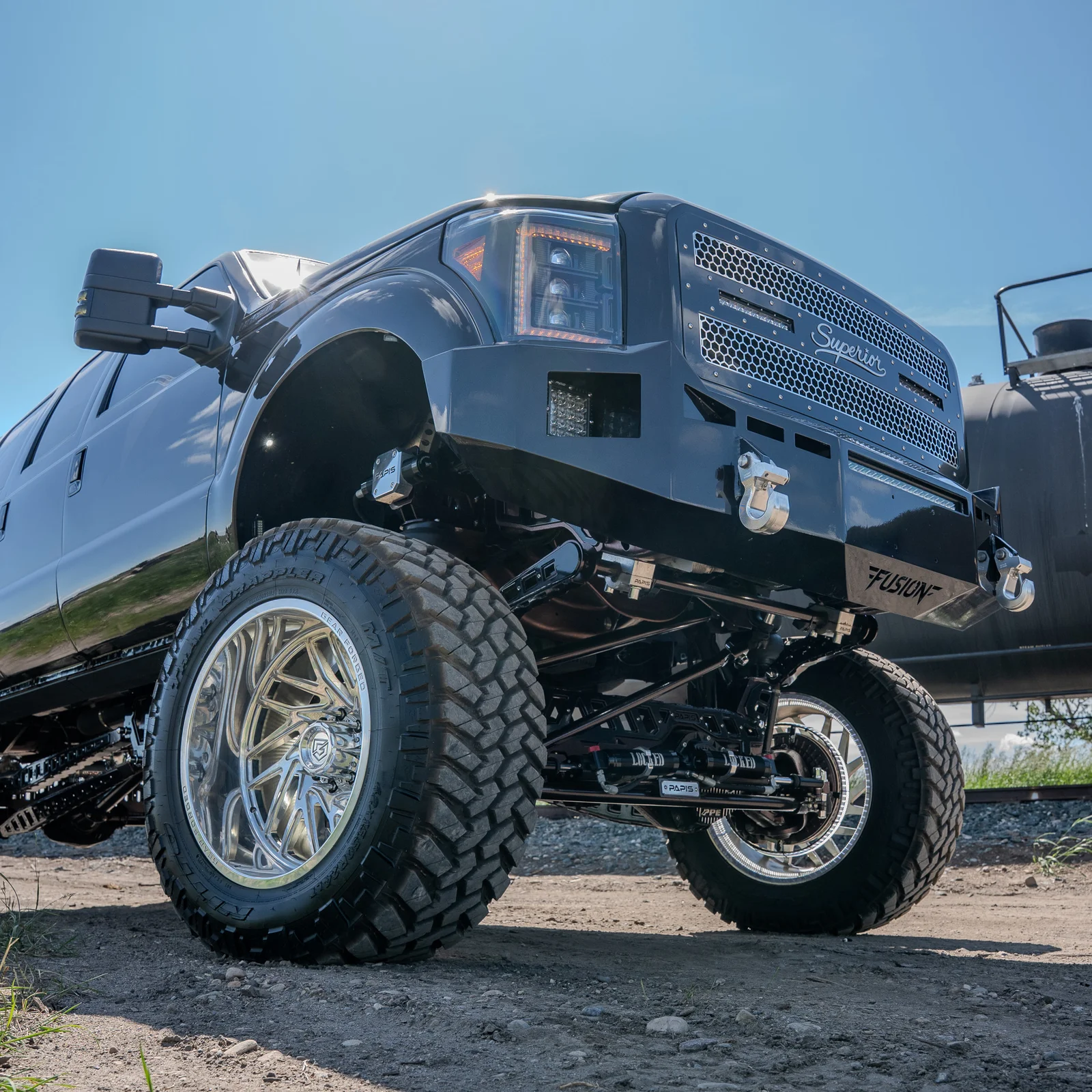
Las Vegas operating conditions
Heat alone is not the
whole story.
A truck commuting empty on the freeway is under a different workload than one idling on a job site, towing equipment, or climbing grades with a heavy trailer.
Las Vegas operating conditions
Heat alone is not the
whole story.
A truck commuting empty on the freeway is under a different workload than one idling on a job site, towing equipment, or climbing grades with a heavy trailer.
The Complete Las Vegas Diesel Maintenance Checklist
Use this as an owner-level review before summer, a long tow, or a demanding work period. It does not replace the manufacturer’s service schedule or inspection procedures.
Engine oil
Check level, condition and service status.
Why it matters
Oil interval depends on engine, oil specification, engine hours and actual operating conditions.
Cooling system
Check coolant level, leaks, hoses and radiator condition.
Why it matters
Cooling demand increases when heat combines with towing, idling or heavy load.
Air filter
Inspect for restriction and dust buildup.
Why it matters
Construction sites, off-road driving and desert roads increase contamination exposure.
Fuel filters
Review service status and water-in-fuel warnings.
Why it matters
Modern diesel injection systems depend on correct filtration.
Transmission & axles
Review fluid condition, leaks and service history.
Why it matters
Towing and payload increase drivetrain workload as well as engine workload.
01
Stay Current on Engine Oil and Filter Service
Engine oil lubricates internal components, carries contaminants and helps move heat through the engine. The correct interval depends on the engine, model year, oil specification, operating conditions, engine hours and the manufacturer’s oil-life system.
A freeway commuter and a truck that tows equipment or idles on a job site do not have the same operating profile. Instead of copying another owner’s fixed-mileage routine, start with the requirements for your exact truck.
If service is due, see Superior Diesel’s truck oil change service in Las Vegas.
Manufacturers also distinguish normal driving from severe operation. Ram diesel maintenance guidance, for example, addresses high ambient temperature, towing, heavy loading and off-road use when discussing severe-service intervals.
02
Give the Cooling System More Attention Before Peak Summer
Depending on the vehicle, a cooling-system inspection may include coolant level and condition, radiator condition, hoses, reservoir, water pump, thermostat operation, cooling fans or fan clutch, leaks and any history of overheating.
Coolant type matters too. Modern diesel trucks may require specific coolant chemistry, so products should be matched to the vehicle rather than mixed because the color appears similar.
For scheduled coolant maintenance, see coolant flush service in Las Vegas. For an active overheating or leak concern, see cooling system repair.
A freeway commuter and a truck that tows equipment or idles on a job site do not have the same operating profile. Instead of copying another owner’s fixed-mileage routine, start with the requirements for your exact truck.
If service is due, see Superior Diesel’s truck oil change service in Las Vegas.
Manufacturers also distinguish normal driving from severe operation. Ram diesel maintenance guidance, for example, addresses high ambient temperature, towing, heavy loading and off-road use when discussing severe-service intervals.
Routine maintenance
Scheduled service
- Oil and filter service
- Coolant service
- Air and fuel filter service
- Fluid maintenance
Needs diagnosis
Do not guess at the cause
- Overheating
- Warning lights
- Coolant loss
- Loss of power or abnormal smoke
03
Inspect Air and Fuel Filtration
Heat gets most of the attention in Las Vegas, but dust matters too. Trucks used on construction sites, unpaved roads or desert trails can expose the intake system to far more contamination than a highway-only truck.
GM’s Duramax diesel owner guidance, for example, notes conditions where fuel-filter service may be required more frequently, including excessive dust, off-road driving and extended towing. The correct schedule still depends on the specific vehicle.
04
Do Not Forget the Transmission and Axles
The engine is not the only system dealing with more heat when a diesel truck works hard. The transmission, transfer case and axles also carry load, especially with trailers, heavy payloads and long grades.
- Review transmission service history and fluid condition.
- Watch for leaks around the transmission, transfer case and axles.
- Know the normal transmission-temperature behavior for your own truck.
- Follow manufacturer differential and transfer-case service requirements.
For scheduled service, see truck transmission service in Las Vegas.
05
Check Tires Before the Pavement Gets Hot
Before a long summer trip or heavy tow, check inflation while the tires are cold, inspect tread and sidewalls, confirm load capacity, and inspect the spare and trailer tires. Do not bleed air from a hot tire simply because the pressure has risen after driving.
Before You Tow
Tap each item as you complete a basic pre-trip check. This does not save or submit any information.
- Engine oil checked
- Truck tires checked
- Transmission reviewed
- Belts and hoses checked
- Coolant checked safely when cold
- Trailer tires checked
- Brakes and trailer brakes checked
- Warning lights reviewed
06
Inspect Belts, Hoses, Batteries and Connections
A truck can have fresh oil and coolant and still be sidelined by a supporting component. Include belts, hoses, battery terminals, wiring and electrical connectors in a pre-summer or pre-trip inspection, especially on trucks that spend time off-road or on job sites.
07
Pay Attention to DPF, DEF and Warning Messages
If your diesel uses a DPF, DEF system or other emissions aftertreatment equipment, recurring warnings should be diagnosed rather than repeatedly cleared. Frequent idling, short trips and interrupted regeneration cycles can affect system behavior on some trucks.
From the shop floor
One real Superior Diesel case goes here.
The content plan requires first-hand experience in every post. This preview reserves the space for an actual Las Vegas truck, real customer concern, diagnosis, service performed and original shop photo.
From the shop floor
One real Superior Diesel case goes here.
The content plan requires first-hand experience in every post. This preview reserves the space for an actual Las Vegas truck, real customer concern, diagnosis, service performed and original shop photo.
Maintenance by priority
Use the service that matches the truck’s actual need rather than replacing parts by guesswork.
Engine protection
Oil Change
Diesel-grade oil and filter service based on the vehicle requirements.
Heat management
Coolant Service
Scheduled coolant replacement and cooling-system maintenance.
Drivetrain
Transmission
Scheduled coolant replacement and cooling-system maintenance.
Find the cause
Diagnostics
Scheduled coolant replacement and cooling-system maintenance.
Real Owner Questions
Diesel Maintenance FAQs
These questions reflect recurring concerns found in diesel-owner communities; answers are kept vehicle-specific and grounded in manufacturer guidance rather than treating forum advice as universal fact.
Does Las Vegas heat mean I should change my diesel oil more often?
Possibly, but heat alone does not create one universal interval. Some manufacturers classify high ambient temperature, towing, heavy loading, extended idling or off-road use as severe service. Follow the schedule and oil specification for the exact truck.
What coolant temperature is too high for a diesel truck while towing?
There is no single temperature that applies to every diesel truck. Engines, fan strategies, gauges and cooling systems differ by model. Learn the truck’s normal behavior and follow its owner manual. An over-temperature warning or meaningful change from normal should be taken seriously.
Why does my coolant level look different when the engine is hot and cold?
Coolant expands as it heats, so reservoir level can change with temperature. Use the manufacturer’s checking procedure and level markings. Repeated cold-level loss, coolant odor, visible leakage or warning messages should be inspected.
Should I inspect filters more often if I drive off-road or on dusty job sites?
Potentially. Dusty and off-road operation can increase contamination exposure, and some manufacturers specify additional inspection or shorter intervals under severe conditions.
What should I check before towing through 100-degree desert heat?
Start with engine oil, coolant, tires, transmission condition, brakes, belts, hoses, warning lights, hitch equipment and trailer tires. Know the truck’s normal temperature behavior before the trip so an abnormal change is easier to recognize.
Get Your Diesel Ready for Las Vegas Heat
Need maintenance, a cooling-system check, or a diagnostic inspection before the next hard-working drive?